


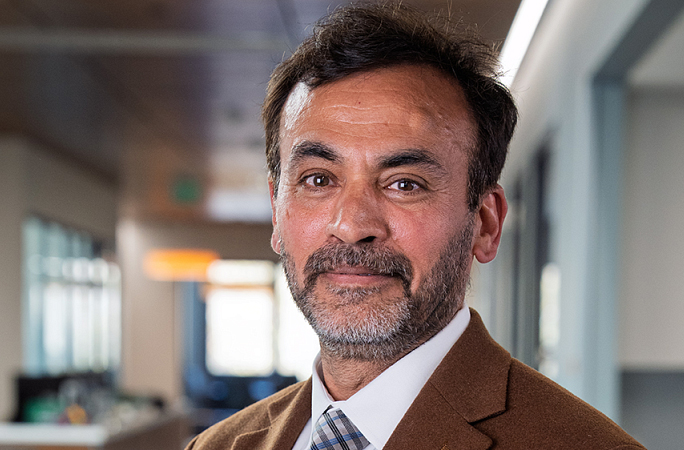
“Adaptation to more-advanced AI systems playing a significantly larger role in human lives won’t be uniform. It will vary across cultures and it will depend on what each society already relies on to reproduce itself socially: What kinds of bonds it assumes, what kinds of obligations it treats as legitimate and what kinds of ties it treats as contamination. To explain why, I want to take a short detour.
Modernity is best understood as a mutation in social reproduction. In pre-modern formations, social reproduction is inseparable from sexual reproduction in the sense that it permanently presupposes certain characteristics of sexual reproduction and relies structurally on them: marriage, lineage, inheritance, kinship. These aren’t merely ‘values.’ They are the infrastructure through which life organizes itself and persists. I discuss these issues in my forthcoming book, ‘Modular Citizenship: From Kinship to Algorithmic Rights Regimes.’
“Modernity reorganizes this infrastructure. It produces a function-based order that often exhibits stark indifference – sometimes even disdain – toward the normative world of kinship and other dense social ties. Where kinship once underpinned survival, modern organizations recode it as misconduct. Kinship becomes nepotism. Friendship becomes cronyism. The ties that once anchored life are reclassified as distortions of fair procedure.
“This contrast becomes clearer across societies. In places where kinship networks remain dense, nepotism is routine and largely unremarkable. In societies where functional communication dominates – especially in the West – nepotism becomes scandalous. The reason is not simply moral; it is structural. Markets, schools, courts and hospitals operate on their own discriminating criteria for selection and rejection, and this generates constant pressure to disregard factors that do not ‘belong’ to the system. These institutions must treat everyone as equal and free in principle, judged only by functional criteria: whether one can pay, whether one is qualified, whether one can provide proof, whether one complies.
A new world is beginning to form in which trust, verification and shared meaning weaken. This matters because many human virtues – kindness, politeness, helping attitudes – did not emerge in abstraction. They were trained inside kinship systems where obligations were thick and memory was long. But in societies where households fragment into single individuals at scale, those training grounds erode.
“Returning to AI, then: People’s adaptation to more-advanced systems will differ from society to society depending on how much pre-modern formation still guides social communication. In functionally advanced societies, adaptation – or rather mal-adaptation – may be quicker, because the thick support of kinship has already thinned. In pre-modern kinship worlds, families – however imperfect – provided meaning, care and a durable place in the social landscape. In advanced societies, that structure is receding and the vacuum it leaves behind becomes a condition of technological uptake. Two consequences follow.
“First, within the functional realms – schools, hospitals, research labs, policing, the judiciary – AI systems will increasingly dominate decision-making. Not because they are wise, but because they scale. They train on quantities of data that no human professional can approximate. And in environments built for procedures and outputs, ‘better prediction’ becomes synonymous with authority. The system that claims to see more will be granted the right to decide more.
“Second, AI will not remain confined to functional domains. It will increasingly guide intimate life, and for some people it will become the most consistent social presence they have. As traditional bonds recede, new forms of connection are demanded; yet what arrives is often not connection but simulation – virtual girlfriends, chatbots, curated feeds that respond without resistance. These offer frictionless interaction and immediate emotional return, but precisely because they are frictionless, they may deepen the isolation they soothe.
“A new world is beginning to form in which trust, verification and shared meaning weaken. This matters because many human virtues – kindness, politeness, helping attitudes – did not emerge in abstraction. They were trained inside kinship systems, initially oriented toward one’s own kin, where obligations were thick and memory was long. But in societies where households fragment into single individuals at scale, those training grounds erode. The social consequences are not reducible to one metric, yet the broader pattern is difficult to ignore: overdose, suicide, homelessness, lone-shooter incidents, involuntary celibacy and escalating mental health crises. Even nostalgia for ‘traditional families’ cannot restore kinship structures that modernity began dissolving long ago; at best it produces an aesthetic without rebuilding the infrastructure.
Modern institutions increasingly privilege function over family. … Organizational norms will increasingly treat the intimacy of social bonds as a procedural hazard – an inappropriate influence, a conflict of interest. …The fantasy life of the future may no longer derive from the same hierarchical, loving, harsh and violent history of human relations that once provided the raw material for meaning.
“I see a future where function systems – markets, education, science, law, the state – become increasingly efficient and accelerate transactions in their domains, while social life frays further. The result is not simply ‘more AI,’ but an uncertain social future for a herd species that no longer reliably lives as a herd.
“As we evolve with these systems, how might the essence and elements of human resilience change? It may help to decompose the figure of the human into three intertwined components: the biological, the psychological and the social. In kinship systems, these were structurally coupled. Kinship formations were built on socio-psychological-sexual reproduction – marriage, lineage, family, clan norms and the mindsets that made those norms feel natural and binding.
“But modernity has been slowly decomposing that structure. Social reproduction separates from sexual reproduction; marriage no longer functions as the axis of social continuity. This does not mean kinship disappears. Kinship communication persists and will persist for decades, coexisting and clashing with functional communication. The direction, however, is clear: modern institutions increasingly privilege function over family.
“This doesn’t mean kinship vanishes inside organizations. Sexual relationships still form at work. Friends still help friends. Families still pull strings. The difference is that these practices now occur under pressure: they are discouraged, regulated, pushed underground or banned.
Resilience may no longer be a simple virtue of the individual. It will become a question of what kinds of couplings can still be sustained – what kinds of bonds, institutions and practices can keep these components coherently connected in a world where both function systems and artificial companions are rapidly expanding.
“Organizational norms will increasingly treat the intimacy of social bonds as a procedural hazard – an inappropriate influence, a conflict of interest.
“As the social and sexual separate, the psychological begins to shift as well. Feelings like politeness learned toward elders, love and loyalty, honor and obligation, even forms of hate and shame – these were not merely private emotions. They were shaped inside kinship worlds, trained through durable relationships, hierarchy, dependency and the long memory of the group.
“When AI systems proliferate, they will initially simulate these traits. A virtual friend can be super polite, teasing, loving, cajoling, so convincingly human that the difference feels irrelevant. But in the long run, some of these simulations may stop making sense, because the social worlds that gave those feelings their structure will keep changing. The fantasy life of the future may no longer derive from the same hierarchical, loving, harsh and violent history of human relations that once provided the raw material for meaning.
“So, what we may be approaching is not ‘human resilience’ in the classical sense – surviving shocks and returning to baseline – but a deeper reconfiguration of what baseline even is. The biological, psychological and social may depart from one another more radically than we assume. And if that happens, resilience may no longer be a simple virtue of the individual. It will become a question of what kinds of couplings can still be sustained – what kinds of bonds, institutions and practices can keep these components coherently connected in a world where both function systems and artificial companions are rapidly expanding.”
This essay was written in January 2026 in reply to the question: “AI systems are likely to begin to play a much more significant role in shaping our decisions, work and daily lives. How might individuals and societies embrace, resist and/or struggle with such transformative change? As opportunities and challenges arise due to the positive, neutral and negative ripple effects of digital change, what cognitive, emotional, social and ethical capacities must we cultivate to ensure effective resilience? What practices and resources will enable resilience? What actions must we take right now to reinforce human and systems resilience? What new vulnerabilities might arise and what new coping strategies are important to teach and nurture?” This and 200-plus additional essay responses are included in the 2026 report “Building a Human Resilience Infrastructure for the AI Age.”